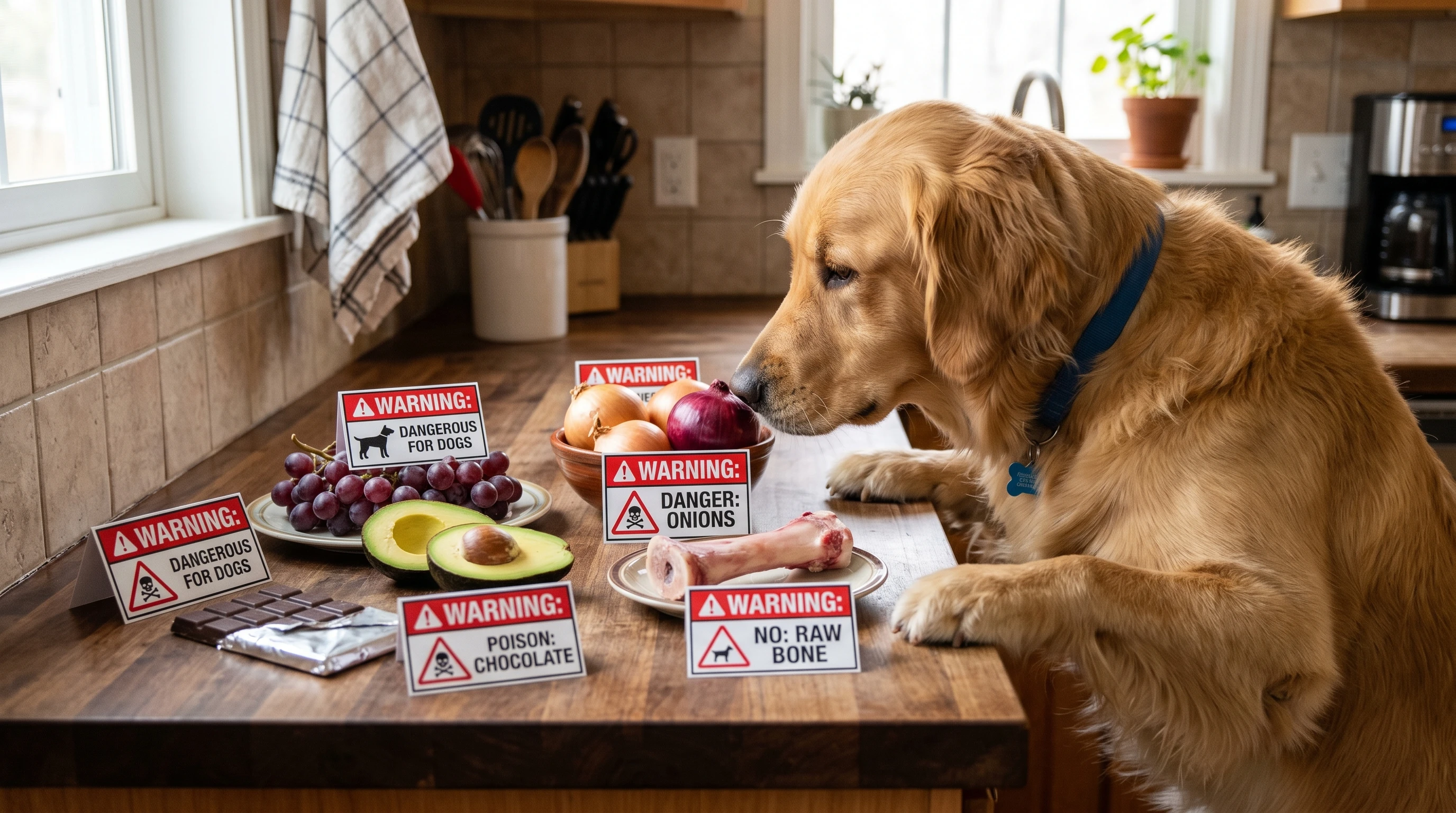
Feeding your dog is a daily routine that might seem pretty straightforward, but there’s a whole list of foods that can actually cause them harm. Through experience, I’ve realized that some things people eat are not safe for dogs, even in tiny amounts. If you’ve ever wondered which foods you absolutely shouldn’t share with your pup, this guide breaks down what you need to know to keep your furry friend healthy and safe.
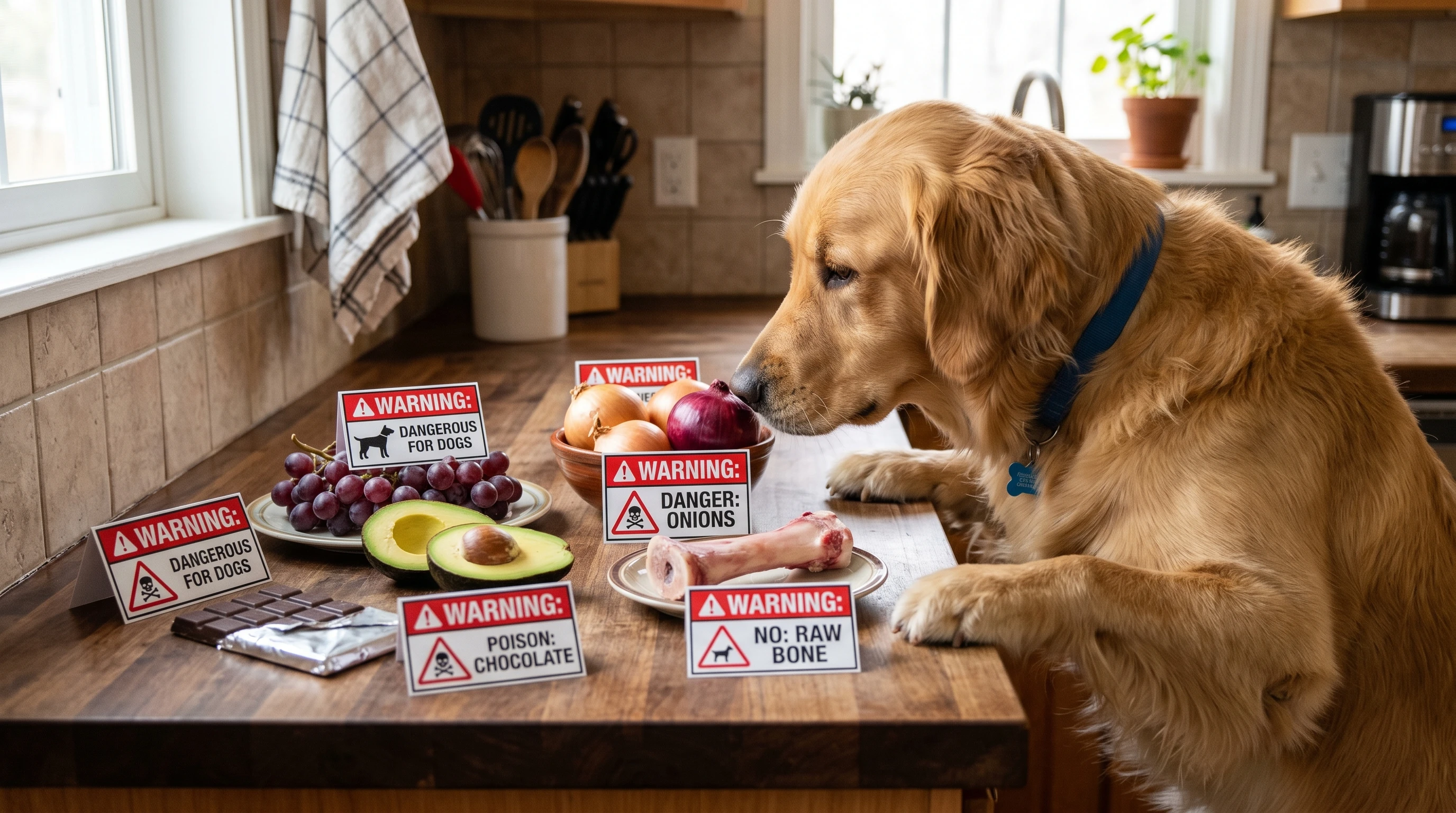
Why Some Human Foods Are Dangerous For Dogs
It’s not always obvious why certain foods cause problems for dogs, but it usually comes down to how different their digestive system is from ours. Dogs process chemicals and ingredients in a completely different way, and their smaller size means even something harmless for humans can create a toxic reaction for them. Paying attention to what they eat plays a huge role in their health and can help avoid expensive emergency vet visits.
Some foods might just cause stomach upset, but others can trigger severe symptoms, like trouble breathing, seizures, or even organ failure. These days, with more pet owners sharing stories online, it’s easier for others to spot these dangers quickly.
Common Foods Dogs Should Never Eat
There are several foods that dogs should avoid, no matter how small the serving. Here are the most common ones to look out for in your home:
- Chocolate: Contains theobromine and caffeine, both toxic for dogs. Dark chocolate and baking chocolate are especially risky. Even small amounts can cause vomiting, fast breathing, or seizures.
- Grapes and Raisins: These can lead to sudden kidney failure. There’s no safe amount, and effects can show up within a few hours, including lethargy, vomiting, or loss of appetite.
- Onions, Garlic, Chives, and Leeks: These belong to the allium family and can cause serious harm to your dog’s red blood cells. Cooked, raw, powdered, or in leftovers, they aren’t safe at all.
- Macadamia Nuts: Even a small number can lead to weakness, tremors, and swelling in dogs.
- Alcohol: Just a few sips can depress their nervous system, make breathing tough, and lower their blood sugar to worrying levels.
- Xylitol (artificial sweetener): Found in gum, candy, and some peanut butters. Xylitol can cause dangerously low blood sugar and liver failure in dogs.
- Avocado: Contains persin, a chemical that leads to vomiting and diarrhea, especially in smaller dogs.
- Bones from Cooked Meat: Raw bones are sometimes suggested by vets, but cooked bones splinter easily and could choke or hurt your dog’s digestive tract.
- Caffeinated Drinks: Coffee, tea, and energy drinks can spike heart rate and blood pressure, and in some cases, become fatal.
Hidden Dangers In Kitchens And Pantries
Some foods aren’t so obvious. I’ve found these are easy to overlook, especially when hidden in recipes or packaged snacks:
- Dough with Yeast: Unbaked bread dough can rise in your dog’s stomach, causing pain and even dangerous bloating.
- Fat Trimmings: Trimming fat from meat and giving it to your dog seems like a treat, but it can cause pancreatitis—a painful and sometimes life-threatening problem.
- Milk and Dairy: Many dogs are lactose intolerant. Gas, diarrhea, and stomach aches are common after cheese or milk.
- Salt and Salty Snacks: Too much salt may lead to sodium ion poisoning. Watch for vomiting, tremors, or even seizures.
- Raw or Undercooked Meat, Eggs, and Fish: These can carry bacteria or parasites that can make both dogs and humans sick.
Quick Reference Guide For Dog-Safe Foods
When making your dog’s meal or handing over a tiny treat, it helps to keep a shortlist of foods you know are safe. Healthy choices for many dogs (in moderation) include plain cooked chicken or turkey (no bones or seasoning), carrots, green beans, pumpkin, plain rice, and apples (without seeds).
Here’s a basic chart for a quick check:
- Safe for Dogs: Plain meats (cooked, boneless, unseasoned), carrots, peas, cooked sweet potatoes, blueberries, plain rice and pasta, and apples (no seeds).
- Unsafe for Dogs: Grapes or raisins, chocolate, onion or garlic, avocados, yeast dough, xylitol, macadamia nuts, cooked bones, and alcohol.
What To Do If Your Dog Eats Something Dangerous
Even the most careful pet parents have a story about a sneaky pup grabbing something off the table. If you know your dog has eaten something from the forbidden list, call your vet or an emergency clinic right away. Keeping the poison control helpline handy—such as the ASPCA’s Poison Control Center (1-888-426-4435)—can be a lifesaver.
Be ready to share what your dog ate, approximately how much, and when. Speedy action is critical, especially for xylitol, chocolate, or grapes. Never attempt to make your dog vomit unless a vet specifically instructs you to—sometimes it can make things worse.
Risk Factors: Why Some Dogs React Strongly
Not every dog reacts the same way to harmful foods. Small breeds are more severely affected than larger dogs due to their size. Age, overall health, and pre-existing medical conditions matter as well. Older dogs or those with liver or kidney issues may react to small doses or have a harder time recovering from toxic exposure.
Breed-specific sensitivities can pop up, too. Herding breeds like Collies and Australian Shepherds may be more sensitive to some ingredients often found in food and medications. Always check with your vet about your individual dog’s risks for some extra guidance.
Tips For Preventing Accidental Poisoning
- Keep unsafe foods inaccessible—in high cupboards, the fridge, or locked drawers for determined counter-surfers.
- Teach family and visitors not to share table scraps, especially with kids who might not know better.
- Read ingredient labels on any packaged food before sharing; xylitol and other dangers can hide in processed snacks.
- Use petproof trash bins, as dogs sometimes rummage for leftovers.
- Practice “leave it” and “drop it” with your dog to add a layer of safety.
Real Stories And Common Questions
I often hear from dog owners who’ve faced these food safety mishaps. For example, a friend’s Labrador once polished off an entire pack of raisins and needed emergency vet treatment. Quick thinking and a call to their vet prevented kidney failure. Cases like these are reminders that it’s always wise to reach out to your vet rather than waiting and worrying.
Question: My dog accidentally ate a small amount of chocolate. What should I do?
Answer: Call your vet right away. Your dog’s size, the type of chocolate, and the amount eaten all play a part in how risky the situation is. Fast action can avert more serious problems.
Question: Are any nuts safe for dogs?
Answer: Most nuts are high in fat and aren’t usually recommended. Macadamia nuts are particularly dangerous. However, plain peanuts (unsalted, unseasoned) and some cashews in small amounts are generally okay for many dogs.
Question: Is it okay to give my dog a piece of pizza crust?
Answer: A plain piece of pizza crust in a small amount probably won’t harm your dog, but it’s better avoided. Pizza crust may have garlic, onions, salt, or oil—none of which are healthy for dogs.
If you’re ever uncertain, playing it safe and reaching out to your vet before offering any new human food is a simple habit. It can prevent a lot of heartache and expensive vet visits.